



Canberra Who's Who
YOUR COMMUNITY. YOUR CONNECTIONS.
Meet the people behind the place.
Discover the people, businesses and groups who call Canberra home, and meet members across Australia.
Each Portrait connects you with the public introduction and links that member has chosen to share.
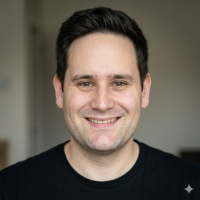
Conor francis Woodward
Local Canberra business owner focused on helping small businesses grow through community-based advertising. Passionate about supporting local trades a…
View Public Profile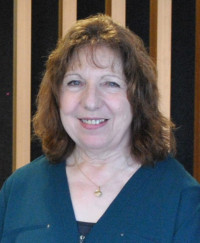
Theona Combos
As a fitness coach at Curves in Jamison, I help women with strength, endurance, flexibility and overall fitness. This is what we need to avoid Dement…
View Public Profile

PART OF THE WIDER NETWORK
Meet members across Australia
Discover members from other towns, cities and regions.

Distinguished and Famous people from Canberra
🎭 Marion Mahony Griffin
Architect Marion Mahony Griffin helped conceive and present the winning design for Canberra, although the competition entry appeared under Walter Burley Griffin's name. Her architectural work and drawings were central to the partnership, and Walter publicly acknowledged her contribution. A graduate of the Massachusetts Institute of Technology, she brought professional training as well as exceptional visual skill to the project. Canberra's association with her is fundamental: the capital's design story includes both Griffins, even when its most familiar place names make only one of them immediately visible.
🔬 Frank Fenner
Scientist Frank Fenner moved to Canberra in 1952 as the Australian National University's microbiology research developed. His work on poxviruses included myxomatosis in rabbits, and he later became a key member of the World Health Organization team involved in eradicating smallpox. He also became the first director of ANU's Centre for Resource and Environmental Studies. His Canberra association spans research, teaching, institution-building and residence, linking laboratories in the capital with an extraordinary international public-health achievement.
📖 Joyce Irene Ackroyd
Joyce Irene Ackroyd taught at Canberra University College from 1956 to 1959 and then held an associate professorship in Japanese at the Australian National University until 1965. Her determination to study Japanese had survived an early obstacle: a teacher’s scholarship would not fund the subject because it was not considered sufficiently useful in secondary schools. She studied it alongside her teaching work and developed a distinguished academic career. Later, as foundation professor at the University of Queensland, she helped expand Japanese-language education, including classes in Queensland schools. An interest initially treated as impractical became the centre of her contribution to Australian learning.
🎹 Albert Arlen
Albert Arlen and his wife, singer and lyricist Nancy Brown, made their home in Canberra after marrying in 1949. In Canberra he worked in the public service while she worked in shops, and together they persisted with musical-theatre projects. Their great success was The Sentimental Bloke, first presented in their own production at Albert Hall in 1961 before a professional tour through Australia and New Zealand. Earlier, the sight of the snow-capped Brindabellas had inspired The Girl from the Snowy. Their partnership combined music, performance and the determined business of getting a show in front of an audience.
⚗️ Arthur Birch
Arthur Birch moved to Canberra in 1967 as a foundation professor at the Australian National University’s Research School of Chemistry, which he had helped plan. The school was intended to match the equipment and standards of leading overseas centres. Birch served two terms as dean while continuing research in organic chemistry; his earlier work had already produced the process known as the Birch reduction. Students remembered an enthusiastic supervisor, occasionally a little too close to an experiment with his cigar. He had learned glassblowing to make apparatus and later enjoyed producing glass animals. The career combined substantial scientific leadership with a persistent pleasure in discovery and practical craft.
📚 Garth Boomer
Garth Boomer moved to Canberra in 1984 to direct the National Curriculum Development Centre and subsequently chaired the Commonwealth Schools Commission. His ideas put learning in a partnership between teachers and students, allowing pupils some choice and encouraging teachers to investigate their own classroom practice. He combined administrative responsibility with an energetic writing and speaking career in English and literacy. He also contributed to the creation of the children’s television programme Lift Off. For Boomer, educational reform could involve policy papers and classroom research, but imagination had a place on the screen as well.
📚 Bob Brissenden
Bob Brissenden joined Canberra University College in 1953 and continued teaching after it became part of the Australian National University. He became part of Canberra’s circle of poets, mentored younger writers and helped establish annual poets’ lunches at ANU. His interests extended from eighteenth-century literature to Australian writing, censorship and satirical songs. Retirement brought a further change of pace with thrillers featuring investigative journalist Tom Caxton. Scholarship and sociability shared the same career: a learned critic could also write a song or a page-turner.
🏛️ Gordon Bryant
His Canberra parliamentary office helped organise the 1967 referendum campaign; he later served as minister for the capital territory. He served in the Whitlam government, first in Aboriginal affairs and then, from 1973, with responsibility for the capital territory. Earlier work included campaigning for recognition of Aboriginal land interests and helping establish representative organisations. His ministerial record also brought administrative conflict and criticism over financial controls in the new Aboriginal affairs department. Canberra’s connection is working government, including both reforming ambitions and the difficulties of putting them into practice.
🤝 Aunty Violet Bulger
Aunty Violet Bulger moved to Canberra in the 1980s, and Violet’s Park at Ngunnawal was named for her contribution to the community in 1993. Her long working life had included domestic service, midwifery and the care of children and grandchildren. She learned midwifery from her mother at a time when Aboriginal women had limited access to maternity hospitals. Earlier years at Brungle and Yass included forced removal and exclusion by reserve authorities, yet she continued to care for a large family and community. Canberra was a later home for an elder whose recognition rested on decades of practical service, not simply a commemorative name on a map.
🗄️ Noel Butlin
Noel Butlin joined the Australian National University in 1951 and became its inaugural professor of economic history in 1962. His research reconstructed the patterns of Australian investment, production and development from detailed evidence. Records he obtained from companies formed the core of ANU’s business and labour archives, later named for him. He was an independent and determined researcher whose interests also reached environmental questions and the costs of road accidents. The archive is a particularly tangible legacy: material gathered to answer his own historical questions became a resource through which other people could ask new ones.
🌿 David Guthrie Catcheside (1907–1994)
David Guthrie Catcheside joined ANU in 1964 and became founding director of its Research School of Biological Sciences in 1966. His research investigated chromosomes, gene action and genetic recombination, while natural history remained a lifelong enthusiasm. He hoped for a community of biologists working across conventional specialist divisions. The ANU school did not fully adopt that vision, but its new building brought six wings together around a refreshment area named Catcheside Court. After returning to Adelaide in retirement, he published both a genetics book and The Mosses of South Australia. Microscopic inheritance and the plants under a bushwalker’s feet belonged to the same curious mind.
📻 Peter Carrodus
Peter Carrodus grew up mainly in Canberra and joined radio station 2CA as an announcer in 1948, later becoming its manager. His station combined local sport and public events with late-night classical music. He also helped the Canberra Symphony Orchestra through a difficult period, inviting Ernest Llewellyn to become its musical director in 1966. Later work took him to Sydney and the volunteer-based 2MBS-FM. In Canberra, however, his association reached well beyond a familiar radio voice: broadcasting management and orchestral organisation both helped sustain the city’s musical life.
🦘 Graeme Caughley
Graeme Caughley moved to Canberra in 1979 to join CSIRO’s wildlife research division. His work asked how weather, plant growth and reproduction shaped the rise and fall of animal populations. He improved ways of estimating kangaroo numbers across inland Australia and became internationally influential in wildlife science. A New Zealand-born former government hunter, he brought field experience together with exacting analysis. He was also willing to challenge established interpretations, treating an appealing wildlife story as a question to be tested rather than a conclusion to be inherited.
📚 Manning Clark
Manning Clark became professor of history at Canberra University College in 1949, beginning his most productive period of writing. He produced the six-volume A History of Australia and became a highly visible public intellectual. His dramatic narrative attracted a large audience alongside criticism over accuracy and interpretation. The Robin Boyd-designed family house, with its book-filled study, later became a centre for ideas and visiting scholars. Canberra’s connection is sustained teaching, writing and home life, including the work and debate behind a historian whose influence reached well beyond the university.
